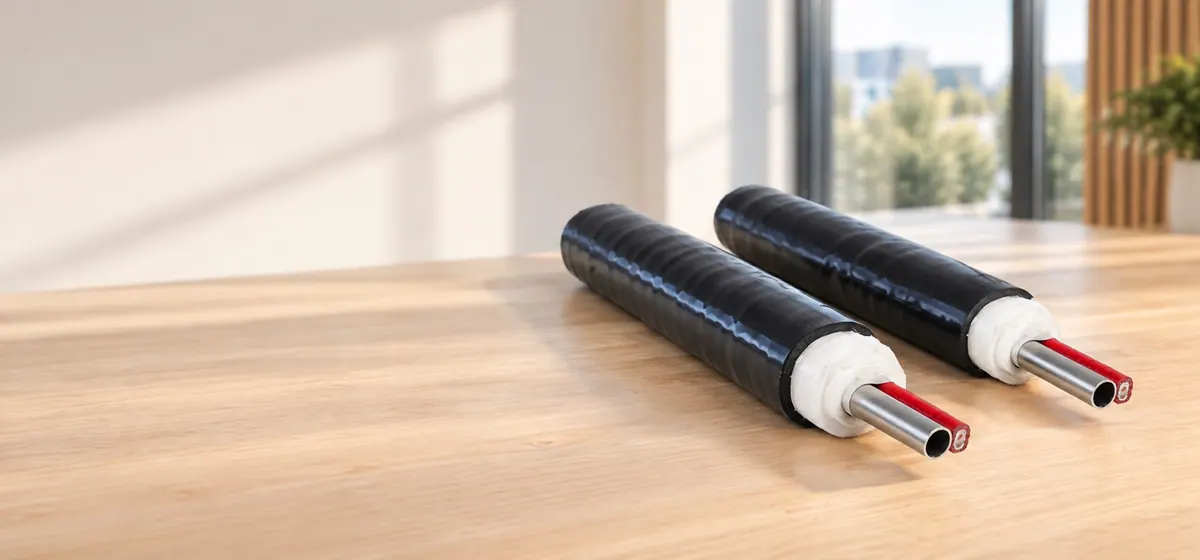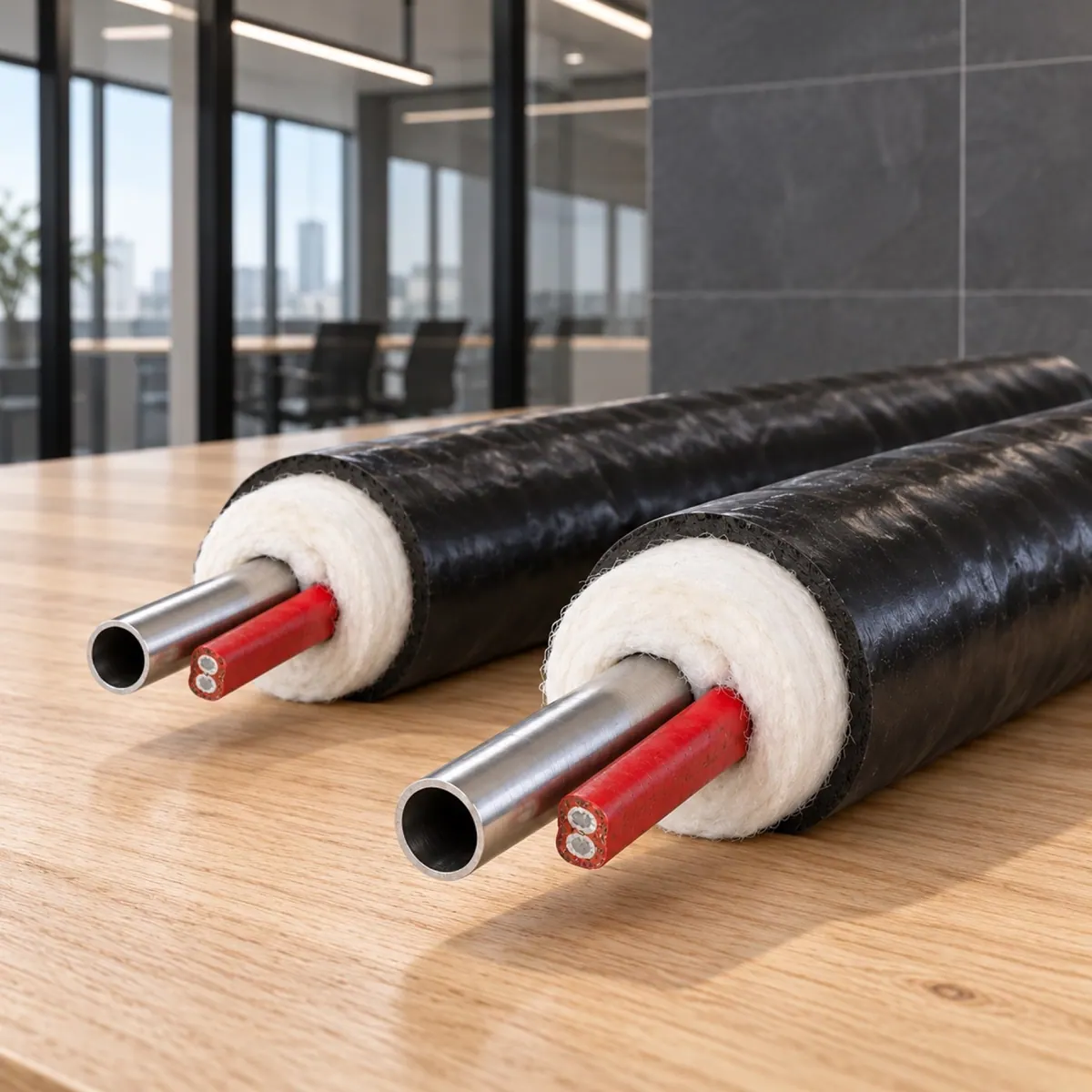
How does electric tracing heat the tube?
The heater runs alongside the process tube within the insulated construction. Heat from the heater supports the required operating condition; insulation reduces loss to the surroundings. The fluid flows inside the process tube, so the wetted material must still be selected for that fluid.
Think of the requirement as a complete route. Connections, exposed ends and changes in the installation environment can affect how the line is specified. Include the starting and finishing equipment in a drawing or description instead of giving only the length of bundle.
What heater types are available?
Marmon lists self-regulating through mineral-insulated heater types within the electrically traced range. These are different constructions for different duties. The appropriate choice depends on the required maintenance temperature and the normal, maximum and cleaning conditions.
Do not treat a heater category as a complete specification. Provide the supply voltage, site requirements and intended sensing or control arrangement. Ask for the data and installation instructions for the exact proposed assembly, including any limits that apply to its use.
When is electrically traced tubing considered?
The manufacturer identifies freeze protection and temperature maintenance as electric-traced duties. Begin with the reason that cooling is a problem: a fluid freezing, an operating temperature being lost, or a sample arriving in the wrong condition.
For an analyser line, describe the sample and the measurement method as well as the temperature. Heated transport is part of the sampling arrangement; a general heater description does not establish suitability for every analytical method.
Maintenance temperature and exposure temperature are different
The maintenance temperature is the condition the process needs during operation. Exposure temperature is a condition the assembly may encounter, for example during a cleaning cycle or a process excursion. Include both, together with the duration and whether the heater is powered at the time.
The coldest ambient conditions also matter. A line passing through indoor and outdoor areas may need the route described in sections. Include idle periods, loss of flow and the shutdown sequence so the review reflects the conditions that could cause a problem.
Prepare an electric-traced tubing enquiry
Send the process information and a route sketch with the electrical details. Identify who will provide the supply, controls and installation work, and ask what accessories are included. This makes it easier to compare quotations on the same scope.
PMA is your UK contact for advice and supply of Dekoron Unitherm tubing. Start with the electrically traced product page, then discuss the construction and documentation for your duty. Where steam is also available, compare both utility arrangements before deciding.
Your questions, answered.
Is electrically traced tubing also called electric heat trace tubing?
Yes, those terms are commonly used for tubing with an electric heating arrangement. Confirm whether the enquiry is for a complete insulated bundle or a heating cable alone.
Does self-regulating mean controls can be omitted?
Do not infer the system controls from the heater name. Confirm sensing, temperature control and electrical protection against the actual duty, site requirements and manufacturer instructions.
Can a heater rating be used as the maintained fluid temperature?
No. The required fluid condition needs to be assessed with the complete construction, ambient conditions, heat loss and operating sequence.
Product information and further reading.
Manufacturer references for the construction and intended duties described in this guide. Ask PMA for ratings, certification and installation information for your proposed assembly.